Custom Packaging Sample Approval Checklist Before Production
Quick answer: Approve custom packaging samples against a written specification, not a photo or an unqualified looks good message. Identify what the sample represents, test it with the actual product, record any exceptions, and retain a labeled reference. Separate approval of artwork, dimensions, material, closures and production release.
Packaging samples answer different questions. A stock bag can show a general format but not your final dimensions. A digital proof can show layout but not filling behavior. A physical sample may use substitute film or an earlier closure. Treat the sample’s scope as part of the approval itself.
Which packaging sample are you approving?
| Sample or proof | Useful for | Confirm before relying on it |
|---|---|---|
| Stock reference sample | General format, feel and examples of available features | Which materials, dimensions or features differ from the proposed order. |
| Unprinted size sample | Product fit, usable opening, closure position and filled shape | Whether the structure and manufacturing process represent production. |
| Digital artwork proof | Text, layout, dieline alignment and artwork revision | Which color, finish and substrate effects are not represented. |
| Printed physical sample | Appearance on a stated film and selected print setup | Whether the print method, film, finish and construction match the order. |
| Pre-production sample | Agreed final characteristics before bulk manufacture | Any substitutions or pending checks and the exact approval scope. |
| Production retained sample | A reference from an identified manufacturing lot | Its connection to the approved specification and inspection records. |
Sample names are not standardized across every supplier. Ask what was made, how it was made and which features are representative. Do not assume that the label pre-production automatically covers every specification.
Build the reference specification before inspection
List the bag format, drawing revision, units, dimension convention, material structure, thickness basis, closures, print revision and relevant performance requirements. Include destination-market documentation where applicable, without treating a sample as proof of compliance.
If the specification is still incomplete, use our custom packaging RFQ checklist to identify the missing fields. Record open questions rather than turning them into silent assumptions.
For thickness, explicitly state one wall or a defined stack and use the microns and mils measurement guide. A hand-feel comparison cannot replace a defined measurement requirement.
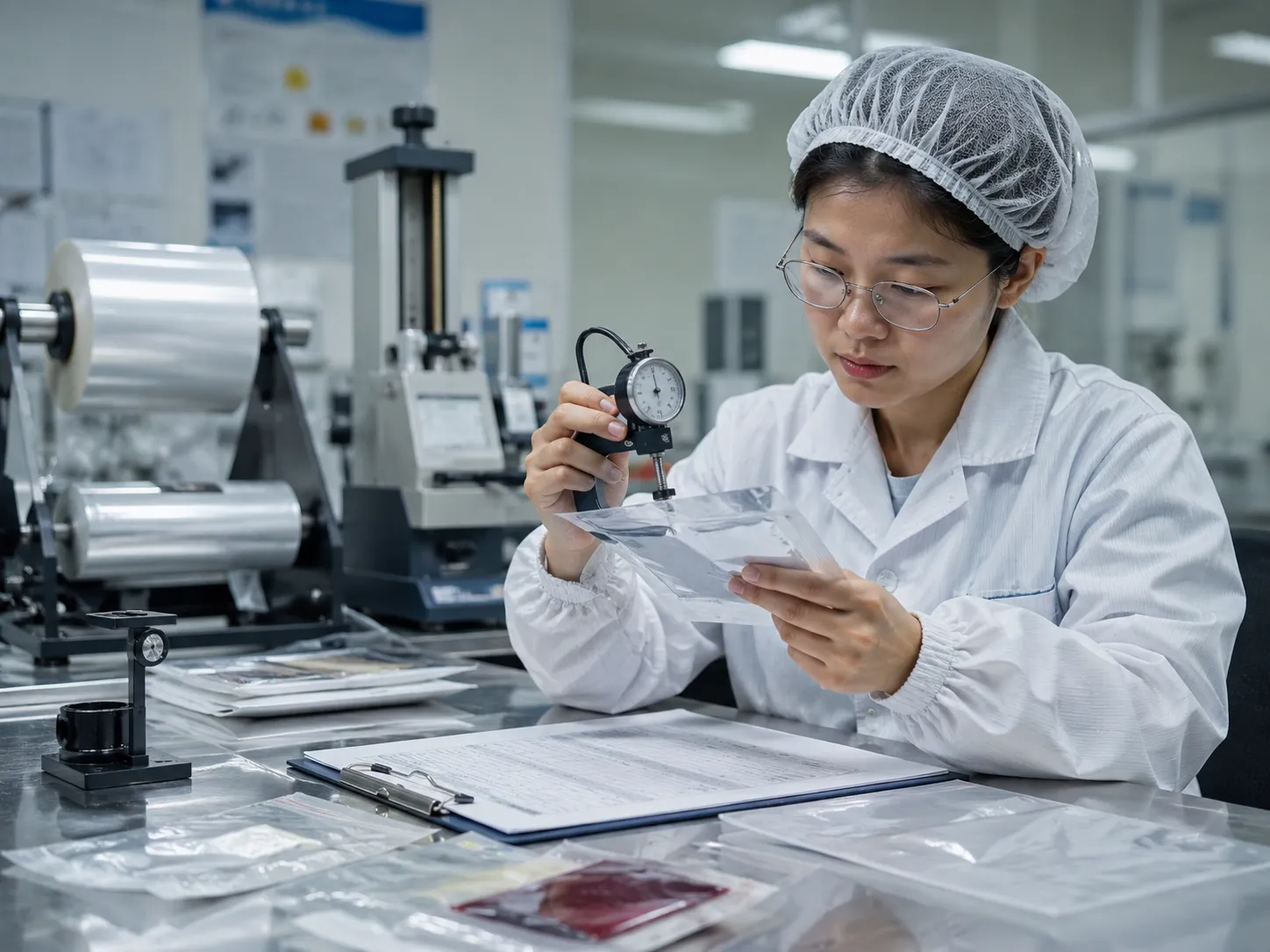
Test fit and use with the actual product
- Fill or pack normally. Use actual product, the intended amount and a representative packing process.
- Operate the closure. Check the zipper, slider, adhesive, valve or final heat-seal area relevant to the design.
- Inspect the filled shape. Look for overfilling, sharp pressure points, unstable standing and strained seams.
- Reopen if intended. Test the customer opening, resealing and return sequence where applicable.
- Check secondary packing. Confirm carton fit, orientation, label visibility and quantity per carton.
- Record the outcome. Connect photographs and results to the sample ID and specification revision.
For pouches, use the pouch fill-weight and sizing guide. For shipping bags, use the poly mailer fit and returns checklist. Neither nominal capacity nor a flat drawing replaces the actual packing trial.
Separate appearance approval from functional approval
Check spelling, barcode or code placement, print orientation, color references, finish and the location of required text against the approved artwork. Agree how physical color will be judged and what reference governs a dispute. Screen appearance and a photograph are not dependable substitutes for the agreed physical print reference.
See our artwork preparation guide for file and proof requirements. Record appearance deviations explicitly, especially if a sample was made with a different print method or substrate.
Functional testing needs its own acceptance criteria. Our seal strength and integrity guide explains why seal appearance, mechanical strength and leakage are different questions. Approving one does not automatically approve the others.
Use an approval record with explicit exceptions
A useful approval record identifies the buyer and supplier, date, sample IDs, specification and artwork revisions, test evidence, decision, approver and remaining conditions. Keep a copy with each party and retain protected, labeled samples where practical.
Sample [ID], received [date], was assessed against specification [revision] and artwork [revision]. Approved characteristics: [list]. Exceptions or unrepresented characteristics: [list]. Required actions: [owner and deadline]. Production release: [approved / held pending listed conditions]. Approved reference retained by: [parties]. Any change to material, dimensions, closures, print or agreed process requires written review before manufacture.
A conditional approval should say what can proceed and what remains on hold. For example, approving the artwork while holding production until a size trial passes is clearer than a single approved stamp on an incomplete sample.
Link sample approval to production and repeat orders
Before releasing production, confirm that the final specification includes the changes agreed during sampling. If a zipper position or film structure changes, decide which checks need repeating rather than assuming an earlier result still applies.
A retained reference helps compare appearance and construction, but it does not prove conformity of every delivered unit. Agree lot inspection, sampling and functional acceptance separately. Incoming checks should connect the delivered lot to its records and approved revision.
For repeat orders, identify the governing revision in the purchase order and require review of proposed substitutions. Retest characteristics affected by a changed material, feature or production assumption. Review aged references if their condition no longer represents the intended pack.
Bowen New Material (Dongguan) Co., Ltd. supplies custom packaging from Dongguan, China. Explore our custom packaging service or send your specification and sample approval requirements to discuss the next step for your project.
Frequently asked questions
Can I approve custom packaging from a photo?
A photo can document appearance, but it cannot establish material identity, dimensions, closure function or filled-pack performance. Match approval to the evidence available.
Is an unprinted sample enough?
It can be useful for fit and construction if representative, but it does not establish final print appearance. Identify which characteristics still need approval.
What is a golden sample?
It is a commonly used term for an agreed physical reference. Define its sample ID, represented characteristics and governing specification because the name alone creates no acceptance limits.
Does sample approval replace pre-shipment inspection?
No. It establishes a reference and decision for the sample. Production-lot acceptance requires its own agreed inspection and test plan.